Podcast Index and public RSS discovery
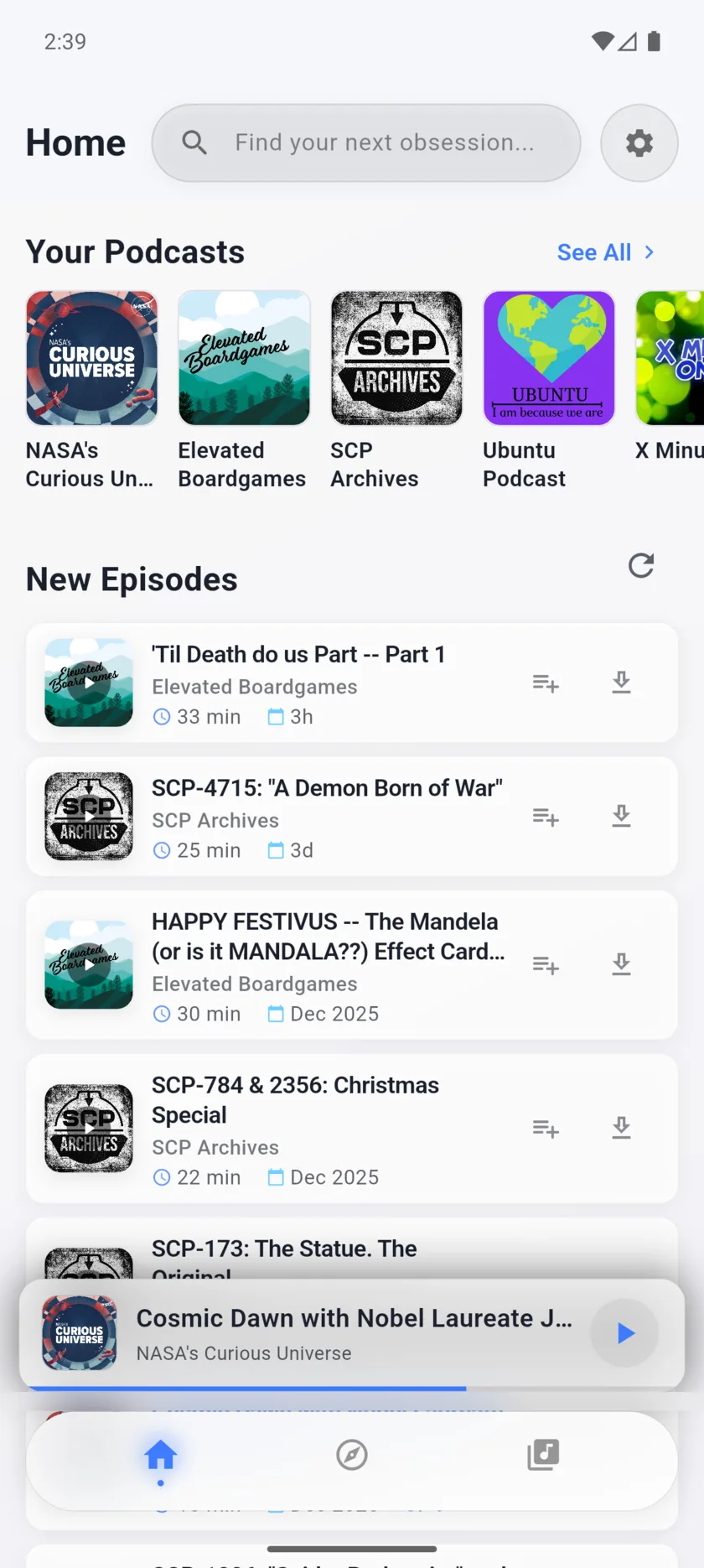
The app uses Podcast Index and standard public podcast RSS feeds for discovery and playback. It is not limited to a single first-party podcast catalog.
Last updated: June 2026
Use this page when you need a precise reference for Podcast Index, RSS, OPML, feed metadata, chapters, and Podcasting 2.0 compatibility in The Podcast App. It describes what is supported today and what remains feed-, platform-, or eligibility-dependent.

The app should be described by the workflows it actually exposes to listeners, not by every tag or capability that exists in the wider podcast ecosystem.
The app uses Podcast Index and standard public podcast RSS feeds for discovery and playback. It is not limited to a single first-party podcast catalog.
Listeners can move followed-show subscription lists with OPML import and export as part of the free core player. OPML does not promise to move playback history, downloads, queue state, private recommendations, or app settings.
The player uses normal feed data such as show title, episode title, artwork, descriptions, enclosure media, and publish information when the publisher provides them in the feed.
Publisher-provided chapters can appear in the player when available. Premium AI chapters are a separate transcript-backed workflow for eligible episodes, while publisher-provided chapters remain feed-dependent.
The website includes free RSS validation, OPML generator, OPML viewer, cover-art checks, launch checklists, and podcast website generation tools for the same open-feed workflow.
Do not claim universal Podcasting 2.0 tag support, podcast hosting, monetization/value-for-value payments, transcript tag rendering for every show, or full account-free cloud sync unless a current app release proves that exact behavior.
These links are included as context for reviewers and podcast ecosystem directories. They do not expand The Podcast App's support beyond the support matrix above.
Search public podcast feeds, follow shows, and start listening before deciding whether to sign in. This keeps ordinary listening separate from account-only or Premium-only workflows.
Use OPML import when another app can export a subscription list. After import, use queue tools, sleep timer, speed controls, limited downloads, and limited transcript creation as normal free-player features.
Use OPML export when you want a subscription list outside the app. Treat OPML as followed-show portability, not a full backup of private listening state.
What sets podcasting apart from most streaming media is that it never had a single gatekeeper controlling what gets published. Any show released as a standard RSS feed can, in principle, be found and followed by any player that reads RSS, with no platform able to remove it from circulation or demand an exclusive licensing deal first. Podcast Index exists specifically to keep that open catalog searchable outside of any one company's walled directory, which is why a player built around it can surface far more shows than a curated top-forty list ever would.
That openness rewards actually looking past the shows that dominate the charts every week. Independent creators publishing without a network behind them, hobbyist shows built around a narrow personal interest, and hyperlocal programs covering a single city or region rarely get algorithmic promotion anywhere at all, but they are just as reachable through open RSS and Podcast Index search as the biggest mainstream hits. Building a habit of searching by topic rather than only browsing what is currently popular turns up a very different, often far more specific, mix of shows worth following.
OPML import and export is the practical tool that keeps this openness genuinely usable day to day rather than purely theoretical. Moving your followed-show list between apps takes a single file, which means trying a different player never has to mean rebuilding a subscription list entirely from scratch, and keeping a periodic OPML export around is a lightweight way to back up that list independent of any one single app you happen to be using.
In practice, a good routine mixes a few well-known shows with smaller, independently published ones discovered through deliberate search rather than a recommendation feed alone. Chapter markers, where a publisher includes them in the feed, are worth using to jump straight to a segment in a long episode instead of scrubbing blindly through the whole thing. A feed that updates on a predictable schedule with clean metadata is usually a decent signal that a show is actively maintained, which matters more for niche independent podcasts than it does for large, well-staffed network shows.
Yes, you can bring in a subscription list using OPML import as part of the free core player. OPML moves your followed-show list, but it does not transfer playback history, downloads, queue state, or app settings from your old app.
No. The app supports Podcast Index and RSS discovery, OPML import/export, standard feed metadata, and publisher-provided chapters where available, but it does not claim universal Podcasting 2.0 tag support, podcast hosting, or value-for-value payment features.
Only if the show's publisher includes chapter data in its feed; publisher-provided chapters are feed-dependent and not guaranteed across every podcast. Separately, Premium AI chapters are a transcript-backed workflow available for eligible episodes.
Yes, since the app uses Podcast Index and public RSS feeds rather than a closed catalog, independent, hobbyist, and hyperlocal shows without network backing are just as searchable by topic as mainstream hits, though they typically don't get algorithmic promotion.
No, OPML export only carries your followed-show list. It does not back up playback history, downloads, queue state, private recommendations, or app settings, so treat it as subscription portability rather than a full backup.
The Podcast App keeps core listening free, with no account required to start and no app-inserted ads. Premium AI is optional and separate from the open-feed basics.