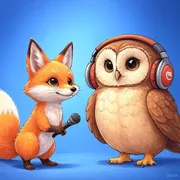
The Podcast App combines free core listening, variable speed, limited offline listening, CarPlay on iOS, and optional Premium Podcast Brain for listeners who want a dedicated podcast player.
Feature Showcase
Best Podcast App 2026
Last updated: March 2026
The Podcast App is built as a dedicated podcast player for 2026. With AI-powered Brain search that lets you query eligible transcript-backed listening history, an experience without app-inserted ads, limited offline listening, and seamless CarPlay integration, it delivers a strong core listening experience with optional Premium upgrades for advanced AI and expanded limits.


Store listings
Live app pages
Use the App Store and Google Play listings for current ratings, review counts, and availability.
Why We Stand Out
Features That Define the Best Podcast App
AI Brain: Search eligible transcript-backed listening history
Ask questions across eligible transcript-backed listening history and get instant, accurate answers. Brain AI transforms passive listening into an interactive knowledge base, letting you recall specific facts, quotes, and insights without scrubbing through hours of audio. This gives podcast listeners a built-in way to revisit eligible transcript-backed moments from their own listening history.
No app-inserted ads, Free core listening
Every podcast, every episode, free for core listening and without app-inserted advertisement interrupting your experience. While other apps gate features behind subscriptions or inject pre-roll ads, The Podcast App delivers a pristine listening environment at no cost -- because great audio should not come with a price tag.
Further reading
Sources and further reading
- Apple PodcastsApple's official podcasts app/platform homepage
- SpotifySpotify homepage (podcasts + music listening)
- Pocket CastsCross-platform podcast player (Automattic)
- OvercastPopular independent iOS podcast player
- Podcast IndexOpen, independent podcast index and API
- Listen NotesPodcast search engine and API
- Edison ResearchLeading US audio/podcast audience research firm
- PodnewsDaily global podcast-industry news of record
2026 decision checklist
Five questions that matter more than splashy feature lists.
- Can I leave later? Prefer OPML import/export so you are not locked in. The Podcast App supports OPML on free core listening — see how to switch.
- Who inserts ads? Separate publisher ads inside audio from app-inserted banners. This app’s free core does not insert its own player ads; details on free podcast app with no app-inserted ads.
- Will it work offline? Commutes and flights need downloads. Free tiers still have limits — treat offline as a workflow, not a marketing checkbox.
- Do I need AI day one? If not, pick a strong free player first. Optional Premium AI (Podcast Brain) can wait until transcripts and chat are useful to you.
- Which platforms? iOS-only tools (for example classic Overcast) fail the moment you share a household Android phone. Dual-platform players win for families and two-device listeners.
When you want a cell-by-cell matrix instead of a narrative checklist, open compare podcast apps.
Hub guidance
Best podcast app 2026: score offline, OPML, ads, car
On /best-podcast-app-2026, rank your non-negotiable first (offline, no app-inserted ads, OPML, platform). The Podcast App competes on free core listening and optional AI — not as a music store.
Related: compare · switch · free app · Overcast alternative.
Further reading
- Pocket CastsCross-platform peer
- OvercastiOS peer
- AntennaPodOpen Android
- Podcast IndexOpen catalog
Editorial depth
Best podcast app 2026: score constraints, not logos
“Best app” is meaningless without constraints. Score candidates on OPML exit, offline limits, transcript/AI tools, CarPlay/Android Auto, and whether free tiers inject app chrome ads.
Our free-core promise: catalog listening without app-inserted banner/player ads; limited downloads; queue/speed/sleep timer; OPML. Premium expands AI and offline. Host-read ads inside episode audio are separate from app UI ads — we do not pretend otherwise.
Compare ecosystems honestly: Apple Podcasts, Pocket Casts, Overcast, open catalog Podcast Index.
Related: compare tables · no app-inserted ads · OPML switch · alternatives.
FAQ
Your Questions, Answered
Yes, The Podcast App is free for core listening to download and use. There are no hidden fees for core listening, and the app has no app-inserted ads. Core listening is free; limited offline listening is available on the free plan, CarPlay works on iOS, and Podcast Brain is Premium.
Brain AI lets you search across eligible transcript-backed listening history using natural language. Ask any question and get instant answers drawn from episodes you have listened to, making it easy to recall specific facts, quotes, or discussions without scrubbing through hours of audio.
Complete Guide
Why The Podcast App Leads the Pack in 2026
The podcast landscape in 2026 is more competitive than ever. Hundreds of millions of listeners worldwide rely on podcast apps daily, and the expectations for what constitutes a great player have evolved dramatically. It is no longer enough to simply play audio files. Today's listeners demand intelligent search, clean interfaces, and features that respect both their time and their attention. The Podcast App was built from the ground up to meet these modern expectations, and it does so without charging a cent.
At the heart of the experience is Brain AI, a feature that fundamentally changes how you interact with podcasts. Rather than treating episodes as disposable audio, Podcast Brain can search eligible transcript-backed moments from your listening history. Forgot which episode discussed a particular business strategy? Ask Brain. Need to find the exact moment a guest shared a book recommendation? Brain retrieves it instantly. This transforms your podcast library from a passive collection into an active, queryable knowledge base -- something no competing app offers at this level of sophistication.
Beyond intelligence, The Podcast App excels at the fundamentals. Eligible offline downloads work within free limits across both iOS and Android, letting you queue up hours of content before a flight or commute. Variable speed playback lets you consume content at 0.5x to 3x speed with pitch correction, so voices remain natural even at higher speeds. CarPlay on iOS integration make hands-free control seamless, and the sleep timer ensures your phone is not playing into the void when you drift off. Every detail has been considered.
What truly sets The Podcast App apart in 2026, however, is its commitment to being without app-inserted ads and free. While competitors have moved toward subscription models, premium tiers, and dynamically inserted advertisements, The Podcast App delivers free core listening, with optional Premium for advanced AI and expanded limits. There are no upsells, no limited free trials, and no interruptions. For listeners who want the best podcast experience in 2026 without spending a dollar, the choice is clear.
The Podcast App: A Feature-by-Feature Breakdown for 2026
Choosing the best podcast app means evaluating how well it handles every aspect of the listening experience, from discovery to playback to recall. In 2026, the bar has been raised significantly. Listeners expect apps to be intelligent, not just functional. They want tools that help them get more from each episode, not apps that treat audio as background noise. The Podcast App was designed to meet this new standard, and each of its core features reflects a deliberate choice to put the listener first.
Discovery is often the first pain point listeners encounter. Many apps rely on algorithmic recommendations that favor popular shows over relevant ones. The Podcast App takes a different approach by combining traditional search with AI-powered exploration. You can search by topic, keyword, or even a phrase you half-remember from an episode. The app can search eligible transcript-backed moments from your listening history.
Playback quality and control matter just as much as discovery. The Podcast App supports variable speed from 0.5x to 3x with advanced pitch correction, ensuring natural-sounding voices at any speed. Chapter support lets you jump directly to segments that interest you. Offline downloads are managed intelligently, with automatic cleanup of listened episodes to save storage space. And with native CarPlay on iOS support, your listening experience transitions seamlessly from phone to car without missing a beat.
Why The Podcast App
The Podcast App is built for listeners who refuse to compromise. It pairs cutting-edge AI technology with rock-solid playback fundamentals, all in a free for core listening, package without app-inserted ads. Whether you are a casual listener or a podcast power user, the app adapts to your needs and delivers a premium experience without the premium price.
- Brain AI Search: Query eligible transcript-backed listening history with natural language and get instant, accurate answers from any episode.
- listening experience without app-inserted ads: No pre-roll ads, no mid-roll interruptions, no banner ads -- just pure podcast audio, always.
- Offline Downloads: Download eligible episodes within free limits for planes, subways, or other offline moments.
- CarPlay on iOS: Hands-free control with full playback integration in your vehicle.
- Variable Speed Playback: Listen from 0.5x to 3x with pitch-corrected audio that keeps voices sounding natural.
Start Listening Now
Experience the Best Podcast App of 2026
Download The Podcast App today and discover why thousands of listeners have made the switch. Free for core listening, with no app-inserted ads in the app.